A quote request is the first impression you make on a manufacturer, and it determines the quality of the answer you get back. A vague message produces a vague reply or a long list of questions. A clear brief produces a useful quotation and a faster start. This guide explains what to include, what to leave open and how to avoid the mistakes that slow requests down.
The three things we need first
At Weftport, three pieces of information let us start a meaningful conversation: your product category, your estimated quantity and your design direction. Category tells us which construction and fabric family we are discussing. Quantity helps us frame the project, which starts from 500 pieces with no upper limit. Design direction, whether a sketch, tech pack or reference garment, tells us what you want to make.
What else helps
Beyond the three essentials, add context:
- Target market. UK, Germany, the US or elsewhere affects labelling and packing.
- Fabric direction. Composition, weight, handfeel or a reference swatch.
- Timeframe. The delivery window you are working towards.
- Sizes. The size range and rough split.
- Trims and branding. Labels, hangtags, buttons, packaging.
- Budget awareness. A target price range helps us suggest options.
You do not need everything on day one. Tell us what you have and what is still open.
Tech pack or not
A tech pack makes a quotation more accurate, because it removes guesswork about construction and measurements. If you do not have one, send flat sketches, a reference garment photo and any measurements you know. Our tech pack checklist shows what a good one contains.
Be clear about what is fixed and what is flexible
Distinguish between must-haves and nice-to-haves. For example: the silhouette and colour are fixed, but the fabric composition is open to suggestion. This helps the factory propose alternatives that match your budget without losing your design intent. If everything is fixed, say so; if you are open to ideas, invite them.
Common mistakes in quote requests
- No quantity. Price depends on quantity, so a quote without one is a guess.
- No reference. Words alone rarely define a garment. Add images.
- Sending different briefs to different suppliers. You cannot compare answers fairly.
- Hiding the budget. A target helps suggest suitable options.
- Unclear timeline. Tell us when you need the goods.
- Expecting final prices from a one-line message.
How to compare quotations
Compare like with like. Check which fabric each quotation assumes, which trims are included, what quantity break applies and what sampling costs are separate. Ask about anything that differs. A lower price based on a cheaper fabric is not a better price for your product.
What happens after you send a request
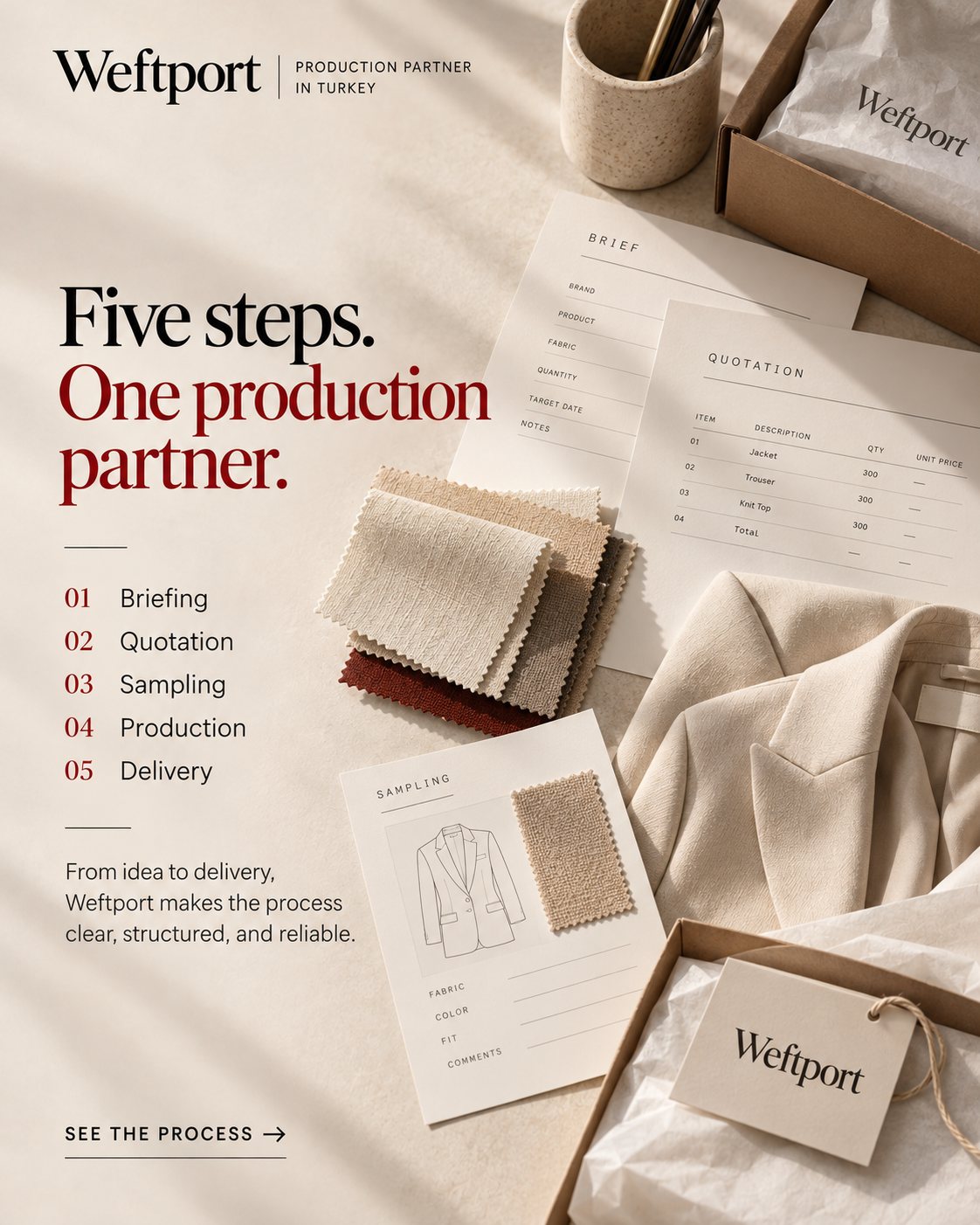
We read your brief, reply with questions or confirmation and move to quotation. From there, the project follows the five steps: briefing, quotation, sample, production and delivery. See the process page for how each one works, or read our overview of the five-step process.
Language and communication
You can write to us in English or German. Short, structured messages work best: bullet points for specifications, attached images for details.
A sample quote request you can copy
Here is a structure that works well. Start with one line: who you are and what you sell. Then list the product category and the number of styles. Add the estimated quantity per style, the sizes and the target market. Describe the fabric direction in a sentence and attach a swatch photo or reference garment. State your timeframe and any fixed requirements, such as colours or trims. Finish with what you would like back: a quotation, a conversation about alternatives or a sample plan. A message built like this can usually be answered with specific questions rather than general ones, which saves a full exchange.
What a good reply looks like
A good reply confirms what was understood, asks only what is needed to proceed and says what the next step is. If you receive a reply that promises everything without asking a single question, treat it with caution: real production depends on fabric, construction and quantity, and a serious partner needs details.
Ready to start
Open the contact page, tell us your product category, estimated quantity and design direction, and we will take it from there.
FAQ
What do I need to send for a quote?
Your product category, estimated quantity and design direction are enough to start. Fabric, target market, timeframe and trims make the quotation more precise.
In which languages can I write?
English or German.
Do I need a tech pack?
No, but it helps. Sketches and a reference garment are enough to begin.